American Museum of Natural History New York
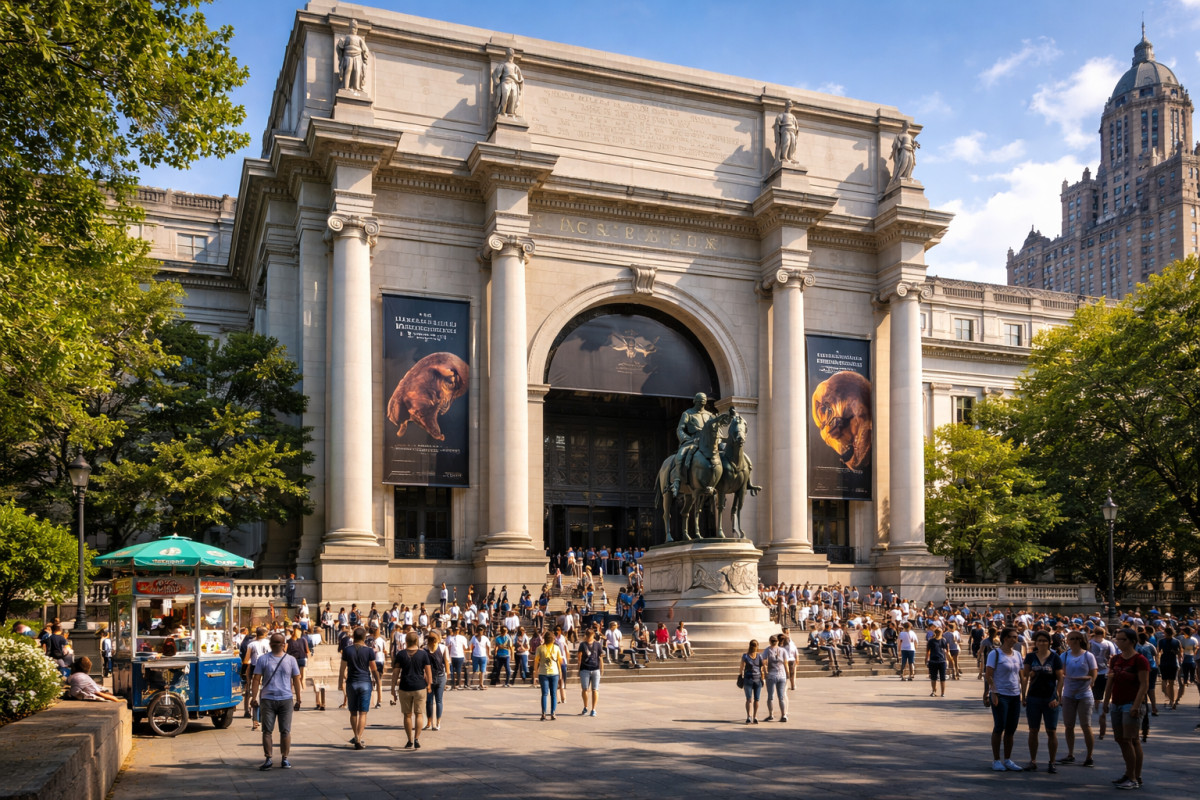
Exploring ancient wonders
Giants of the mesozoic era
A visit to the American Museum of Natural History inevitably gravitates towards its world-renowned dinosaur halls. Here, scientific rigor meets captivating display, offering an unparalleled journey into Earth's distant past. The awe-inspiring Hall of Vertebrate Origins serves as a grand preamble, setting the stage for the dramatic narratives that unfold. Moving into the fossil halls, one encounters an astonishing array of perfectly preserved skeletons, each telling a segment of an ancient story. The sheer scale of the Hall of Saurischian Dinosaurs is breathtaking, dominated by the formidable Tyrannosaurus rex, poised in a hunting stance that ignites the imagination. Its massive skull and dagger-like teeth speak volumes of its predatory prowess. Nearby, the majestic Barosaurus rears up on its hind legs, protecting its young, a truly iconic pose that has greeted generations of visitors. This colossal sauropod’s sheer length underscores the vastness of creatures that once roamed the Earth. In the Hall of Ornithischian Dinosaurs, the focus shifts to herbivores, with impressive specimens like the Triceratops, recognizable by its distinctive frill and three horns, and the armored Ankylosaurus. Each exhibit is meticulously curated, not merely displaying bones but reconstructing ecosystems and behavior, bringing these extinct titans to vivid life. The journey through these halls is a profound educational experience, illuminating the evolutionary marvels and the ultimate mystery of their disappearance.
To stand beneath the colossal skeletons is to grasp the sheer, awe-inspiring scale of prehistoric life and feel a profound connection to Earth's deep temporal tapestry.
The living world's tapestry
Beyond the prehistoric realm, the museum presents an extraordinary collection dedicated to the modern mammalian world. The dioramas throughout the African, Asian, and North American Mammal Halls are masterpieces of naturalistic artistry. These immersive displays transport visitors to diverse habitats, from the African savanna teeming with elephants, giraffes, and lions, frozen in dynamic poses, to the dense jungles housing tigers and orangutans. Each diorama is a carefully constructed tableau, meticulously recreating flora, fauna, and environmental details, offering a window into ecosystems far removed from the urban sprawl of New York City. The Hall of North American Mammals showcases the continent’s rich biodiversity, featuring grizzly bears, bison, and moose amidst meticulously painted backdrops that depict their natural landscapes. These exhibits serve not only as a visual spectacle but also as a powerful educational tool, highlighting the interconnectedness of species and their environments. They underscore the importance of conservation efforts in preserving these magnificent creatures and the habitats they call home. The level of detail, from the texture of the animals' fur to the subtle variations in light and shadow, creates an illusion of peering directly into a living wilderness.
Typical bus rental prices:
| Bus Type | Per Hour | Per Day |
|---|---|---|
| 56-Passenger | $165 – $200 | $1,450 – $1,950 |
| Luxury Van | $100 – $125 min 6 hours | $1,100 – $1,250 10 hours |
Unveiling cosmic mysteries
A voyage through the universe
The Rose Center for Earth and Space stands as a testament to humanity's enduring fascination with the cosmos. Its centerpiece, the Hayden Planetarium, offers an unparalleled immersive experience, launching visitors on breathtaking journeys through the universe. The Space Show, presented in the magnificent Star Theater, utilizes state-of-the-art projection technology to render stunning visualizations of galaxies, nebulae, and celestial phenomena, guided by insightful narration. This is not merely a viewing; it's a sensory immersion into the vastness and beauty of space, explaining complex astrophysical concepts in an accessible and awe-inspiring manner.
The journey through the cosmos at the Hayden Planetarium transcends mere observation, transforming it into an unforgettable voyage of discovery that redefines one’s perspective on existence.
Below the planetarium sphere, the Cosmic Pathway spirals down, chronicling 13 billion years of cosmic evolution from the Big Bang to the present day. Each step along this pathway represents millions of years, illustrating key milestones in the formation of stars, galaxies, and ultimately, life on Earth. This exhibit provides a tangible sense of the immense timescales involved in cosmic processes. The Scales of the Universe display further complements this, offering a comparative look at the size of objects from subatomic particles to the largest superclusters of galaxies, challenging perceptions of scale and perspective.
Earth's geological marvels
Adjacent to the cosmic journey, the Halls of Gems and Minerals unveil the stunning artistic and scientific beauty of Earth's geological processes. This recently renovated exhibit showcases an extraordinary collection of over 5,000 specimens, from dazzling diamonds and vibrant emeralds to rare meteorites and fluorescent rocks. Interactive displays and touchable specimens enhance the learning experience, explaining the geological forces that create these natural treasures. Visitors can explore the formation of different crystal structures, marvel at the raw beauty of natural gold nuggets, and even touch a piece of the universe in the form of meteorites that have fallen to Earth. The exhibition thoughtfully blends aesthetics with scientific understanding, revealing the stories etched within each stone and the intricate processes of the Earth's crust.
Popular Bus Types




Humanity's journey and global cultures
From hominids to civilizations
The Milstein Hall of Ocean Life presents a mesmerizing dive into the planet's vast aquatic ecosystems. Dominated by the iconic 94-foot blue whale model suspended overhead, this hall is a celebration of marine biodiversity. Below the impressive whale, meticulously crafted dioramas depict diverse underwater habitats, from coral reefs teeming with colorful fish to the mysterious depths inhabited by colossal squid. The exhibit highlights the intricate food webs, migratory patterns, and the remarkable adaptations of marine life, while also addressing pressing conservation issues facing our oceans today. This immersive experience underscores the critical role oceans play in Earth’s climate and the urgent need for their protection. The Halls of Human Origins and Cultural Halls offer a compelling narrative of human evolution and the incredible diversity of cultures across the globe. The Hall of Human Origins traces our evolutionary path from early hominids through the development of modern humans, featuring fossil casts, interactive displays, and engaging explanations of archaeological discoveries. It explores the cognitive and technological advancements that have shaped our species. Elsewhere, the halls dedicated to the peoples of Africa, Asia, and the Pacific showcase exquisite artifacts, traditional clothing, tools, and ceremonial objects, providing a rich tapestry of human ingenuity, beliefs, and societal structures. These exhibits foster a deeper understanding and appreciation for the vast spectrum of human experience and cultural heritage worldwide. For those planning a group excursion, navigating the bustling streets of New York City can be a challenge. Consider simplifying your travel logistics by arranging dedicated transportation. A comfortable and convenient solution for school trips, corporate outings, or family reunions is to rent a charter bus. This ensures everyone travels together, on time, and without the stress of public transport or multiple vehicles. For reliable and efficient group transportation solutions, explore options at Bus Rental.
Photo Gallery





Innovation and ongoing exploration
The richard gilder center for science, education, and innovation
The American Museum of Natural History continues to evolve, exemplified by the addition of the Richard Gilder Center for Science, Education, and Innovation. This architectural marvel not only expands the museum’s physical footprint but also significantly enhances its visitor experience with state-of-the-art exhibits and educational spaces. The Gilder Center introduces fascinating new dimensions to the museum's offerings. Its Insectarium, for instance, provides an up-close look at the incredible diversity and vital role of insects in ecosystems worldwide, featuring live insect displays and interactive exhibits that demystify these often-misunderstood creatures. The Butterfly Vivarium offers a serene and enchanting experience, allowing visitors to walk among hundreds of free-flying butterflies in a lush, tropical environment. Furthermore, the Gilder Center houses the Davis Family Butterfly Conservatory, providing another opportunity for immersive interaction with these delicate pollinators. This new wing seamlessly integrates with the existing museum, creating a flowing, interconnected journey that encourages exploration and discovery across various scientific disciplines. It stands as a vibrant testament to the museum's commitment to advancing scientific literacy and inspiring future generations of scientists and naturalists. The building itself is a work of art, featuring soaring, organic forms that evoke natural geological formations, inviting visitors deeper into the wonders of science.
Planning your visit to amnh
Admission information and tickets
Visiting the American Museum of Natural History offers various ticket options to suit different interests and budgets. It is highly recommended to purchase tickets online in advance to secure your preferred entry time and avoid potential queues. New York State residents and students from the tri-state area (NY, NJ, CT) may be eligible for "Pay-What-You-Wish" general admission tickets at the ticket counter. Approximate prices for general admission (includes access to 45 permanent halls) are as follows:
| Ticket type | Price range |
|---|---|
| Adult | $28 |
| Senior (60+) | $22 |
| Student (with valid ID) | $22 |
| Child (3-12) | $16 |
| Child (under 3) | Free |
For enhanced experiences, combo tickets are available that include general admission plus access to special exhibitions, the Hayden Planetarium Space Show, or the 3D film. These "General Admission + One" or "General Admission + All" tickets range from $34 to $40 for adults, with corresponding discounts for seniors, students, and children. Check the official museum website for the most current pricing and to book your tickets.
Navigating your way from central manhattan
The American Museum of Natural History is conveniently located on the Upper West Side of Manhattan, making it easily accessible from various points in the city. * By subway
The most straightforward way to reach the museum from central Manhattan is by subway. Take the B (weekdays only) or C train to the 81st Street–Museum of Natural History station. This station exits directly into the museum's lower level, providing an effortless entry. Alternatively, you can take the 1 train to the 79th Street station and walk two blocks east to the museum. * By bus
Several MTA bus lines serve the museum. The M79, M7, M10, and M11 buses all have stops conveniently located within a block or two of the museum's entrances. Consult an MTA bus map or app for the most efficient route from your specific starting point. * By walking or taxi/rideshare
If you are staying in the Upper West Side or near Central Park, a pleasant walk through the park can lead you to the museum. From Times Square or Midtown, a taxi or rideshare service will provide a direct and quick journey, typically taking 10-20 minutes depending on traffic. The museum’s main entrance is on Central Park West at 79th Street.
Frequently Asked Questions
What is the American Museum of Natural History?
Where is the museum located?
What are the operating hours of the museum?
How do I purchase tickets and what are the admission fees?
What are some of the most popular exhibits at the museum?
How long should I plan for a visit to the museum?
Is the museum accessible for visitors with disabilities?
Are there dining options available at the museum?
What transportation options are available to reach the museum?
Read Also





OUR FLEET
Our Buses
Explore our modern, comfortable and well-maintained charter bus fleet.