Museum of Modern Art New York
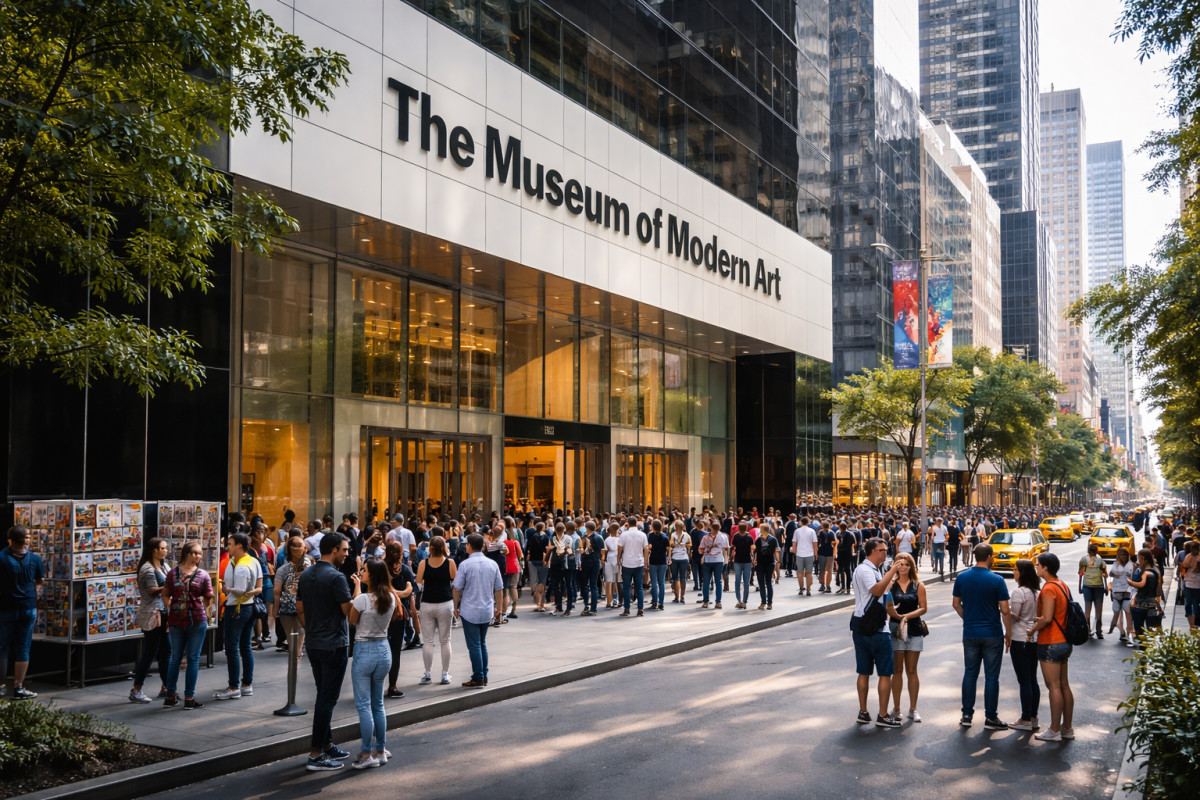
The pulsating core of modern art
Stepping into the Museum of Modern Art in New York is to enter a vibrant nexus where the revolutionary spirit of the 20th and 21st centuries converges. It is not merely a repository of artworks, but a dynamic crucible where ideas were forged, boundaries were shattered, and the very definition of art was perpetually re-examined. MoMA stands as an unparalleled institution, a meticulously curated chronicle of human creativity's relentless push against convention.
A sanctuary of groundbreaking visions
This esteemed institution functions as a vital sanctuary for the avant-garde, showcasing the audacious leaps of imagination that have shaped our visual landscape. Its walls resonate with the echoes of artistic movements, each gallery offering an immersion into the mindsets that dared to envision new realities. Visitors are invited to witness the genesis of modernism, tracing its myriad permutations through masterworks that redefined painting, sculpture, photography, and design.
"MoMA is more than a museum; it is a meticulously woven tapestry of human audacity, where every thread represents a challenge to the status quo and a testament to enduring artistic innovation."
Navigating the aesthetic currents
The journey through MoMA's galleries is a curated voyage across the tumultuous seas of modern and contemporary art. Each floor unveils a distinct epoch or thematic focus, allowing for a profound engagement with the forces that propelled artists to innovate and experiment. The collection is a testament to the power of art to reflect, refract, and ultimately reshape human experience.
Canvas conversations
The painting collection alone represents a staggering concentration of genius. From the swirling cosmic energy of Vincent van Gogh's The Starry Night, which transcends mere depiction to capture an emotional universe, to the fragmented realities of Pablo Picasso's Les Demoiselles d'Avignon, a work that detonated the foundations of classical perspective, the dialogues between canvases are palpable. Henri Matisse's vibrant abstractions, Jackson Pollock's groundbreaking drip paintings, and Frida Kahlo's poignant self-portraits each offer a unique lens through which to comprehend the evolving language of paint.
Sculptural dialogues
Beyond the two-dimensional, MoMA's sculptural holdings offer a compelling narrative of form and space. Here, the visitor encounters the raw power of Auguste Rodin's explorations of the human condition, the serene elegance of Constantin Brâncuși's simplified forms seeking essential truths, and the existential angst embodied in Alberto Giacometti's attenuated figures. These three-dimensional works do not just occupy space; they actively engage with it, inviting contemplation on volume, void, and the very nature of existence.
Beyond the painted surface
MoMA's commitment to modernism extends far beyond traditional painting and sculpture, embracing every medium that artists have harnessed to express contemporary sensibilities. This expansive approach solidifies its role as a comprehensive chronicler of modern visual culture.
Photographic lenses on reality
The photography department at MoMA presents a captivating anthology of images that have documented, interpreted, and often challenged our perception of reality. From the stark social commentary of Dorothea Lange to the surreal compositions of Man Ray, the collection reveals how the camera transformed both art and documentation. It is a powerful testament to photography's capacity to freeze fleeting moments, provoke thought, and shape collective memory.
Design and architectural blueprints
The museum recognizes the profound artistry embedded in everyday objects and architectural marvels. Its design and architecture galleries feature iconic pieces that illustrate the fusion of aesthetics and functionality. This includes revolutionary furniture, industrial design products, and significant architectural models and drawings that collectively tell the story of how design has shaped our living environments and aspirations.
- Architectural models
Frank Lloyd Wright's Fallingwater
- Iconic chairs
Charles and Ray Eames Lounge Chair
- Utilitarian art
Dieter Rams' industrial designs
- Graphic innovation
Seminal posters and typography
Cinematic narratives and moving images
MoMA's film collection is unparalleled, celebrating cinema as a pivotal modern art form. Through its ongoing screening programs and archival treasures, the museum provides a crucial platform for understanding the evolution of storytelling through motion pictures, from avant-garde experiments to seminal Hollywood classics and international masterpieces. It’s an immersive exploration of light, shadow, and narrative as pure artistic expression.
The ever-evolving narrative
MoMA is not static; it is a perpetually evolving institution that continually recontextualizes its existing collection while vigorously acquiring new works that define contemporary discourse. Its programmatic dynamism ensures that it remains at the forefront of artistic exploration.
Engaging with the avant-garde
Temporary exhibitions at MoMA are consistently pushing the boundaries, introducing visitors to emerging artists, revisiting overlooked movements, or offering profound thematic explorations that connect historical threads to present-day concerns. These special showcases are vital for keeping the institution fresh and relevant, inviting constant critical engagement and discovery.
"The true genius of MoMA lies not just in its preservation of the past, but in its relentless pursuit of the future, consistently challenging its audience to confront the unfamiliar and embrace the new."
The visitor's journey
The experience of navigating MoMA is itself a form of aesthetic engagement. The architectural design of the building, with its thoughtful exhibition spaces, encourages introspection and allows the art to breathe. Visitors move from quiet contemplation of an abstract canvas to the bustling energy of a public installation, each transition part of a larger, carefully orchestrated narrative designed to provoke thought and inspire wonder.
MoMA's cultural resonance
As a global beacon of artistic innovation, MoMA's influence extends far beyond its physical walls, embedding itself deeply within the fabric of international culture and academic discourse.
An urban beacon
Located in the heart of Midtown Manhattan, the Museum of Modern Art stands as a prominent cultural landmark in New York City. It is an essential pilgrimage site for art enthusiasts, students, and curious minds from around the globe, contributing immeasurably to the city's vibrant cultural tapestry. Its presence enriches the urban experience, offering a sanctuary for reflection amidst the metropolitan hum.
Defining modern visual culture
MoMA has played an instrumental role in shaping the canon of modern art, influencing how generations perceive and value artistic expression. Its curatorial decisions and exhibition strategies have not only celebrated but also actively defined what constitutes modern and contemporary art, creating a lasting legacy that continues to resonate across the art world and beyond.
Frequently Asked Questions
Where is The Museum of Modern Art (MoMA) located?
What are the benefits of a MoMA membership?
What is the best time to visit MoMA to avoid crowds?
Is MoMA accessible for visitors with disabilities?
Is there a gift shop at MoMA?
Are there dining options available at MoMA?
How much time should I allocate for a visit to MoMA?
What kind of art collection does MoMA house?
How can I purchase tickets for MoMA, and what are the prices?
What are MoMA's operating hours?
Does MoMA host special exhibitions?
Read Also


OUR FLEET
Our Buses
Explore our modern, comfortable and well-maintained charter bus fleet.