
Northeast USA and Canada Bus Tour
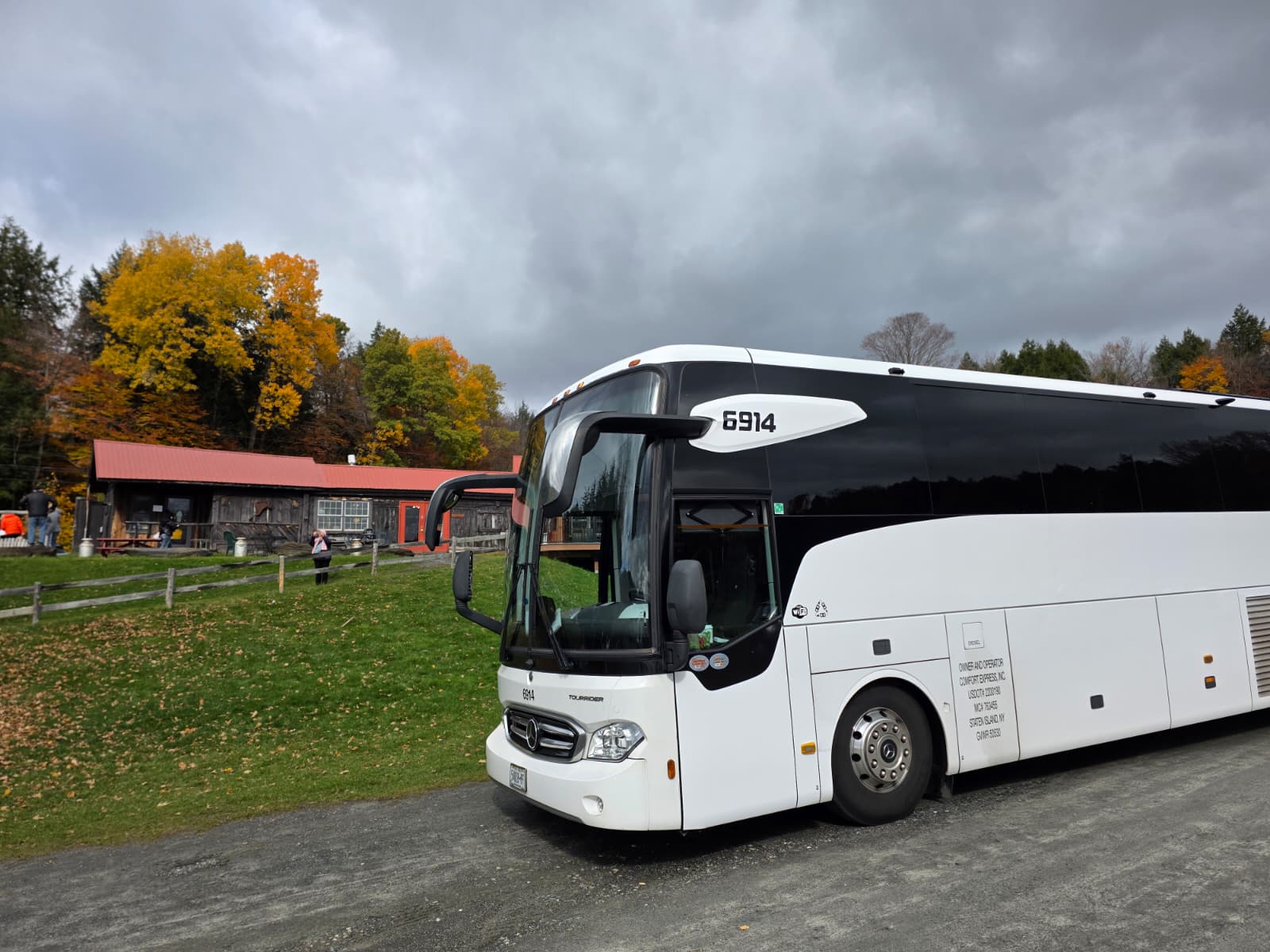
Traveling through the northeastern United States and eastern Canada offers an unusual combination of historic American towns, French-Canadian architecture, mountain landscapes and vibrant cities. Within a relatively compact region, travelers can experience the peaceful countryside of Vermont, the multicultural atmosphere of Montreal and the centuries-old streets of Quebec City.
For groups departing from New York City, this journey can become much more than a conventional sightseeing vacation. A carefully planned charter bus tour allows passengers to explore multiple destinations without coordinating rental cars, navigating unfamiliar roads or arranging separate transportation between hotels and attractions.
The route is particularly attractive in autumn, when the forests of New England and southern Quebec turn brilliant shades of red, orange and gold. However, the same journey offers distinctive experiences during spring, summer and winter.
One of the most rewarding aspects of this itinerary is the gradual change in atmosphere. The trip begins among the skyscrapers of New York, continues through the mountain scenery of Vermont and eventually reaches the French-speaking cities along the St. Lawrence River.
Why the Northeast USA and Eastern Canada Make an Excellent Group Travel Destination
Unlike cross-country tours that require exceptionally long driving days, a Northeast USA and Canada itinerary connects several major attractions within manageable distances. Although the complete journey covers hundreds of miles, organizing it over five to seven days gives travelers time to enjoy the destinations rather than simply observe them through bus windows.
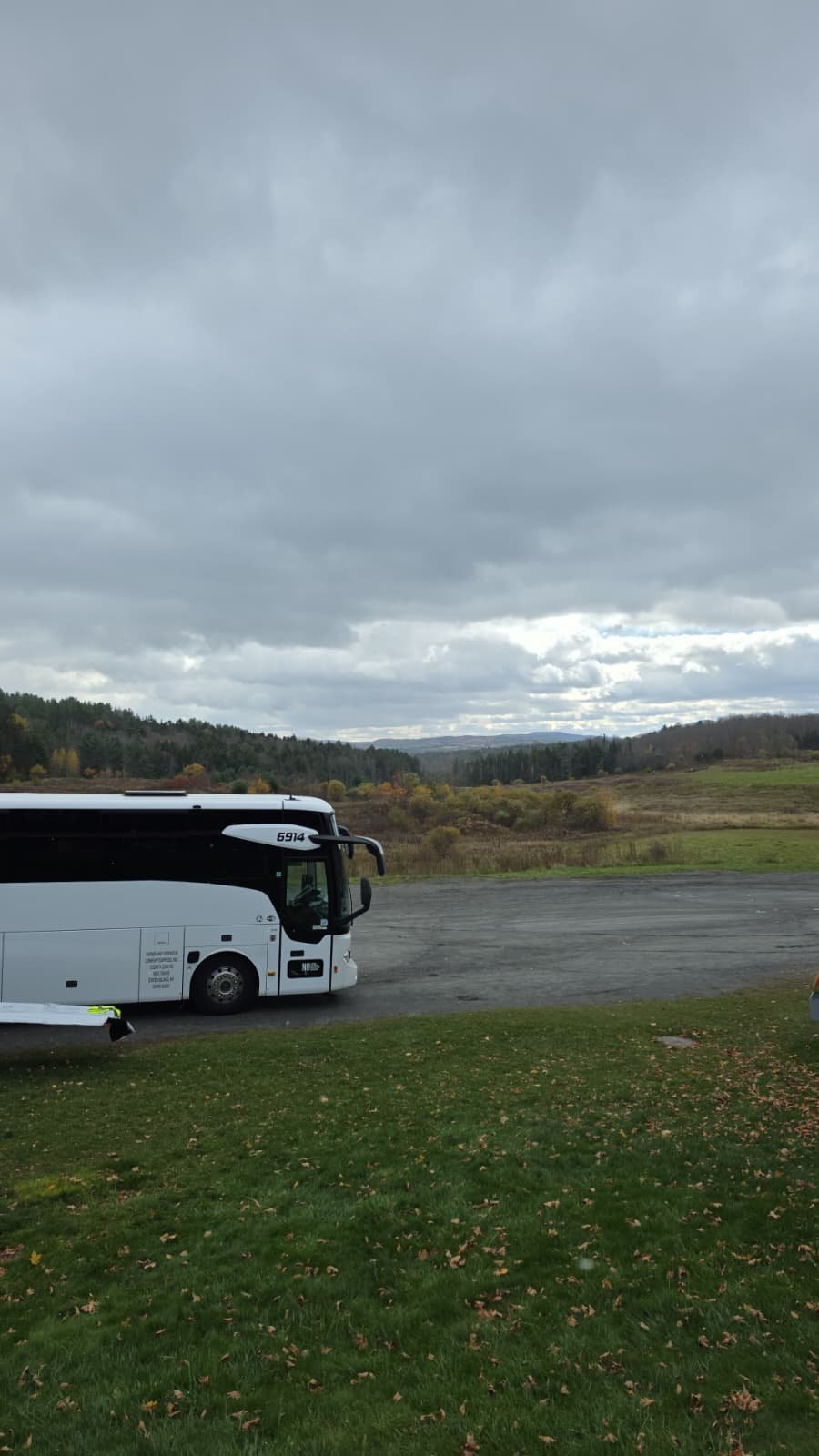
Vermont offers small towns, historic government buildings, scenic highways and mountain views. Montreal provides a different experience, combining historic neighborhoods, religious landmarks, restaurants and contemporary city life. Quebec City introduces another dimension, with fortified streets, European-style architecture and exceptional views of the St. Lawrence River.
These contrasts make the region especially suitable for organized sightseeing groups, educational programs, senior travel clubs, international visitors and private tours.
A well-designed itinerary also benefits from the flexibility of charter bus transportation. Stops can be adjusted to accommodate sightseeing interests, meals, weather conditions and the needs of individual passengers.
The greatest advantage of a multi-destination bus tour is not simply reaching several cities. It is creating a continuous travel experience in which the roads, landscapes and smaller stops become part of the journey.
However, flexibility should not be confused with unlimited driving time. Cross-border procedures, scheduled attractions, parking restrictions and driver rest requirements must all be considered before confirming the itinerary.
Recommended 7-Day Bus Tour Itinerary from New York City
A seven-day schedule provides a reasonable balance between driving and sightseeing. Travelers who want more museum visits, outdoor activities or relaxed mornings may prefer extending the trip to eight or nine days.
The following itinerary is one possible loop that begins and ends in New York City.
| Day | Destination | Main experiences |
|---|---|---|
| 1 | NYC to Vermont | Hudson Valley scenery and arrival in Vermont |
| 2 | Montpelier and Northern Vermont | Vermont State House, downtown and countryside |
| 3 | Vermont to Montreal | Border crossing, Old Montreal and city sightseeing |
| 4 | Montreal | Saint Joseph's Oratory, Mount Royal and historic neighborhoods |
| 5 | Montreal to Quebec City | St. Lawrence corridor and Old Quebec |
| 6 | Quebec City | Château Frontenac, historic streets and cultural attractions |
| 7 | Quebec City to NYC | Return journey through the United States |
This schedule is best understood as a planning framework. The final day involves a particularly long drive from Quebec City to New York City, including a border crossing. Groups seeking a more comfortable itinerary should divide the return journey into two days.
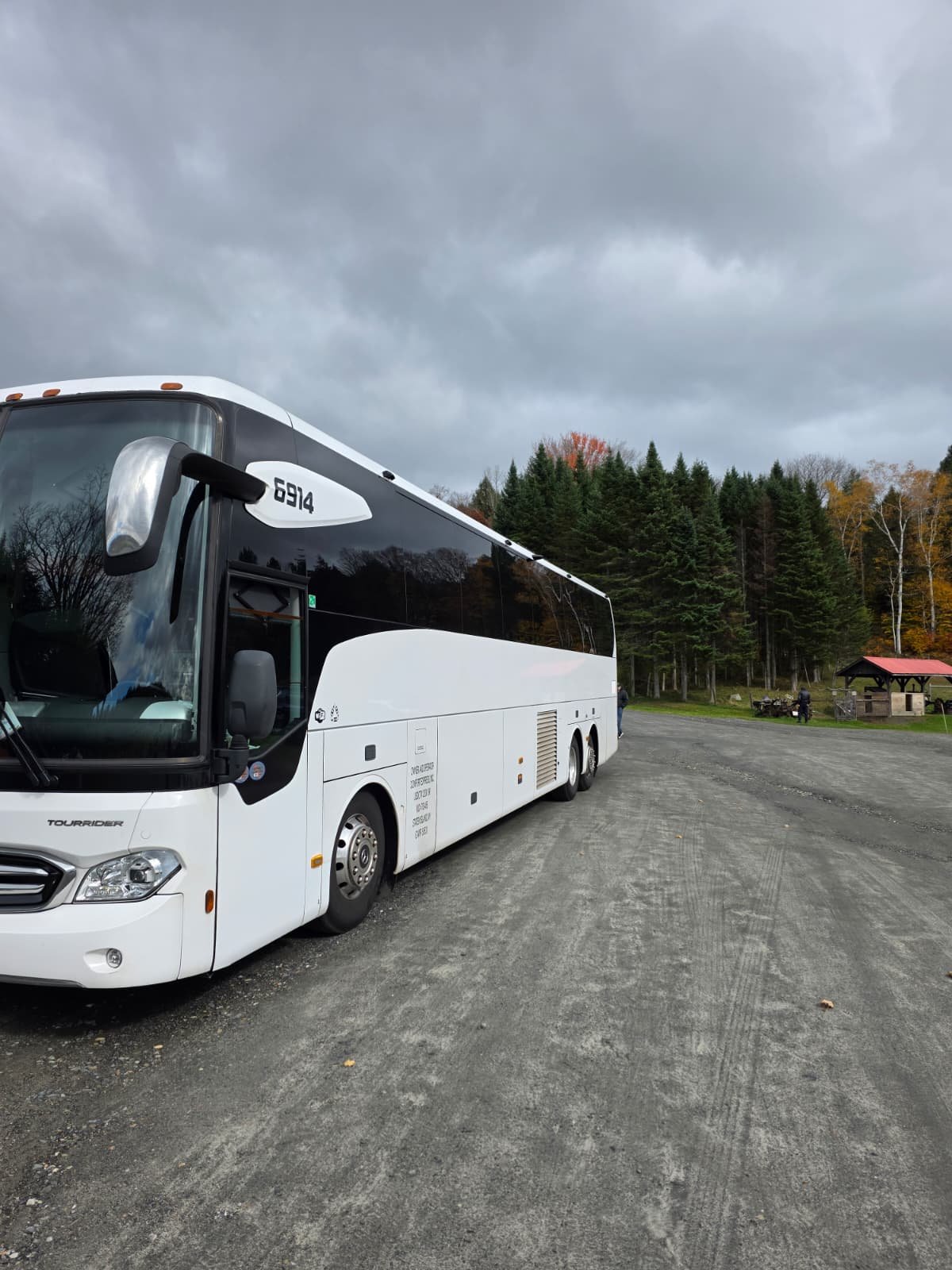
Day 1: Leaving New York City for the Mountains of Vermont
The journey begins in New York City, where a private charter bus can collect passengers from an agreed meeting point, hotel or other suitable pickup location.
After departing the metropolitan area, the landscape gradually changes. Dense urban development gives way to wooded hills, rivers, agricultural land and small communities.
Depending on the selected route, groups may travel through the Hudson Valley or eastern New York before continuing into Vermont.
The first day should include opportunities for breaks, lunch and short scenic stops. Rather than scheduling too many attractions immediately, it is usually better to allow travelers to settle into the journey and enjoy the changing surroundings.
A practical first-day plan includes:
-
Morning group pickup in New York City.
-
Departure toward northern New York or Vermont.
-
Scheduled rest and meal stops.
-
Optional scenic viewpoint or small-town visit.
-
Afternoon or evening arrival at the hotel.
For larger groups, the departure time should account for traffic leaving New York City. Starting early can be useful, but the schedule should also respect the driver's available hours of service.
Day 2: Montpelier, Vermont's Historic State Capital
Montpelier is one of the most interesting stops on a cultural tour through Vermont. Although considerably smaller than major American cities, it offers a memorable combination of historic architecture, civic landmarks and a walkable downtown.
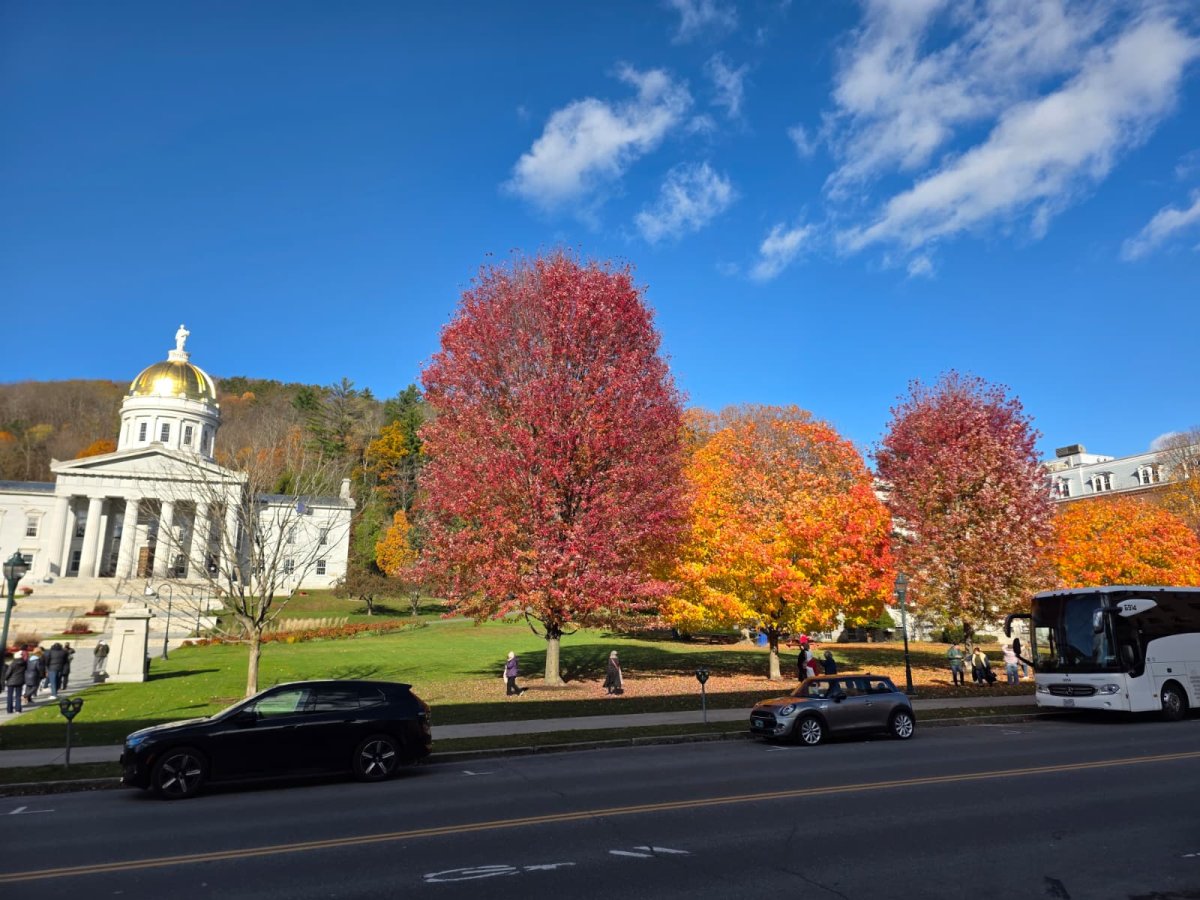
Its most recognizable building is the Vermont State House, located at 115 State Street.
The building's gold-covered dome rises above a classical façade supported by columns. Behind the capitol, wooded hills create a picturesque backdrop that becomes especially impressive during the fall foliage season.
The present State House has been occupied since 1859. Its dome is topped by a statue representing Ceres, the Roman goddess of agriculture.
Groups visiting Montpelier can explore several nearby attractions:
-
Vermont State House: A historic government building offering opportunities to learn about state politics and architecture.
-
Downtown Montpelier: A compact district with independent shops, cafés and historic streets.
-
Hubbard Park: A wooded recreational area suitable for visitors interested in outdoor scenery.
-
Local food establishments: Opportunities to sample regional products, including Vermont maple specialties.
-
Scenic roads outside the city: Particularly attractive during the autumn color season.
The Vermont State House offers guided and self-guided visiting opportunities, although schedules vary. Organized group tours should be arranged in advance.
For a charter bus group, two to four hours in Montpelier may be enough for a downtown walk, an exterior photography stop and a guided visit, depending on availability.
Why Montpelier Is Especially Beautiful in Autumn
Vermont is widely associated with colorful autumn forests. Sugar maples, red maples and other deciduous trees produce a striking variety of seasonal colors.
The timing varies with elevation and weather. Northern and higher-elevation locations often reach their peak colors earlier than lower and southern areas.
For a group specifically interested in fall foliage, scheduling the Vermont portion of the trip around late September or early October can be a useful starting point. Actual conditions should be checked closer to departure.
The advantage of stopping in Montpelier is that visitors can enjoy both natural scenery and historic architecture without spending an entire day at a single attraction.
Day 3: Crossing the Border into Canada and Exploring Montreal
Traveling from Vermont to Montreal introduces one of the most distinctive moments of the journey: crossing the international border between the United States and Canada.
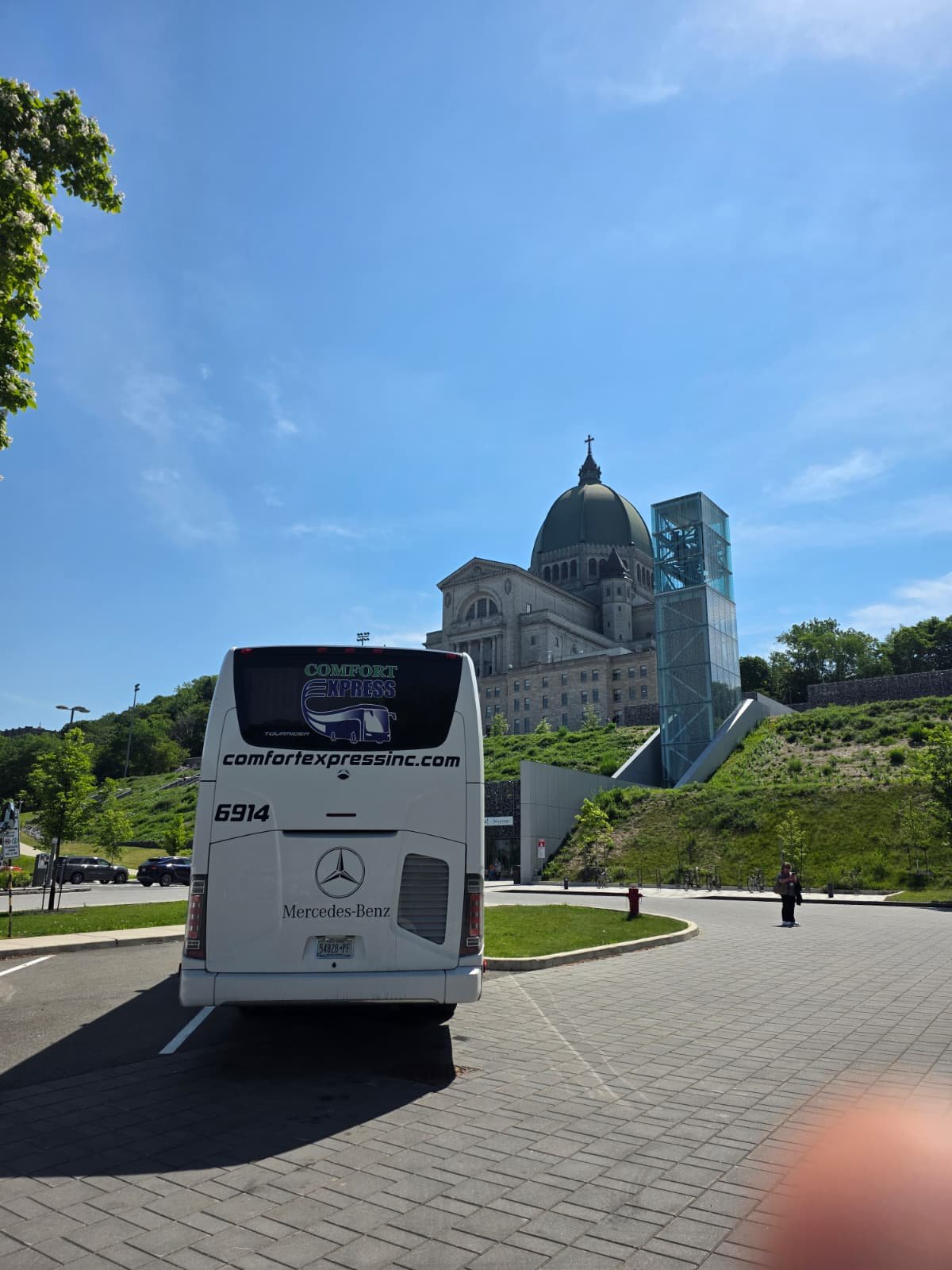
Depending on the departure location and border checkpoint, Montreal can be reached after a drive through northern Vermont and southern Quebec.
The scenery gradually changes from wooded countryside to agricultural landscapes, suburban communities and eventually the urban skyline of Montreal.
International travel requires more preparation than an ordinary interstate bus trip. Every passenger must meet Canada's entry requirements, and travelers returning to the United States must have appropriate documents for reentry.
The nationality and immigration status of each passenger may affect which documents are required.
Important Documents for a USA-Canada Charter Bus Tour
Before departure, organizers should complete several essential checks:
-
Confirm the citizenship and immigration status of every traveler.
-
Verify that passengers have the appropriate travel documents for entering Canada.
-
Check whether any participants require a Canadian visitor visa.
-
Confirm the documents required for returning to the United States.
-
Prepare necessary parental consent documentation when minors are traveling without their parents or legal guardians.
-
Coordinate the international itinerary with the charter bus operator.
U.S. citizens generally benefit from traveling with a valid passport, although certain other approved documents may be accepted for land crossings. Travelers holding passports from other countries must check the requirements that apply to their nationality.
A Canadian electronic travel authorization, or eTA, is generally associated with air travel and should not be assumed to replace a visa required for entering Canada by bus.
Border preparation should begin before the transportation reservation is finalized. One passenger without the required documents can affect the itinerary of an entire group.
Border processing times are unpredictable. Groups should avoid scheduling expensive, time-sensitive activities immediately after the expected border crossing.
Discovering Old Montreal
Once in Montreal, a visit to Old Montreal provides an excellent introduction to the city's history.
Cobblestone streets, historic buildings, public squares and riverside attractions create an atmosphere quite different from that of most major American cities.
Visitors can explore the area on foot, making it suitable for groups whose bus can use an authorized passenger drop-off location.
The district contains some of Montreal's most recognizable landmarks, including Notre-Dame Basilica, Place Jacques-Cartier and streets that preserve the architectural character of the city's early development.
An afternoon walking tour allows visitors to explore at a comfortable pace before gathering for dinner.
Day 4: Saint Joseph's Oratory and the Best of Montreal
A full day in Montreal allows travelers to experience attractions outside the historic downtown area.
One of the city's most impressive landmarks is Saint Joseph's Oratory of Mount Royal.
Located at 3800 Queen Mary Road, the sanctuary is known for its enormous dome, monumental architecture and prominent hillside setting.
Its history is closely associated with Saint Brother André, who established the original chapel in 1904. Over time, the site developed into an internationally recognized religious destination.
Today, visitors come for religious observance, architecture, history and panoramic views.
Visiting Saint Joseph's Oratory by Charter Bus
The Oratory is particularly suitable for group sightseeing because it offers a combination of indoor and outdoor attractions.
Highlights include:
-
The monumental basilica and its impressive dome.
-
The original chapel associated with Saint Brother André.
-
Religious art and historical exhibits.
-
Landscaped grounds and outdoor viewpoints.
-
Opportunities for quiet reflection and photography.
The destination lists parking facilities for buses and coaches, although groups should confirm current arrangements and availability before arrival.
The steep landscape and multiple levels mean that accessibility and walking requirements should be considered carefully, especially for senior groups.
After visiting the Oratory, travelers can continue to Mount Royal Park or return to central Montreal.
Mount Royal Park and Panoramic City Views
Mount Royal Park offers a different perspective on Montreal. Its wooded slopes and viewpoints make it a popular destination for sightseeing and recreation.
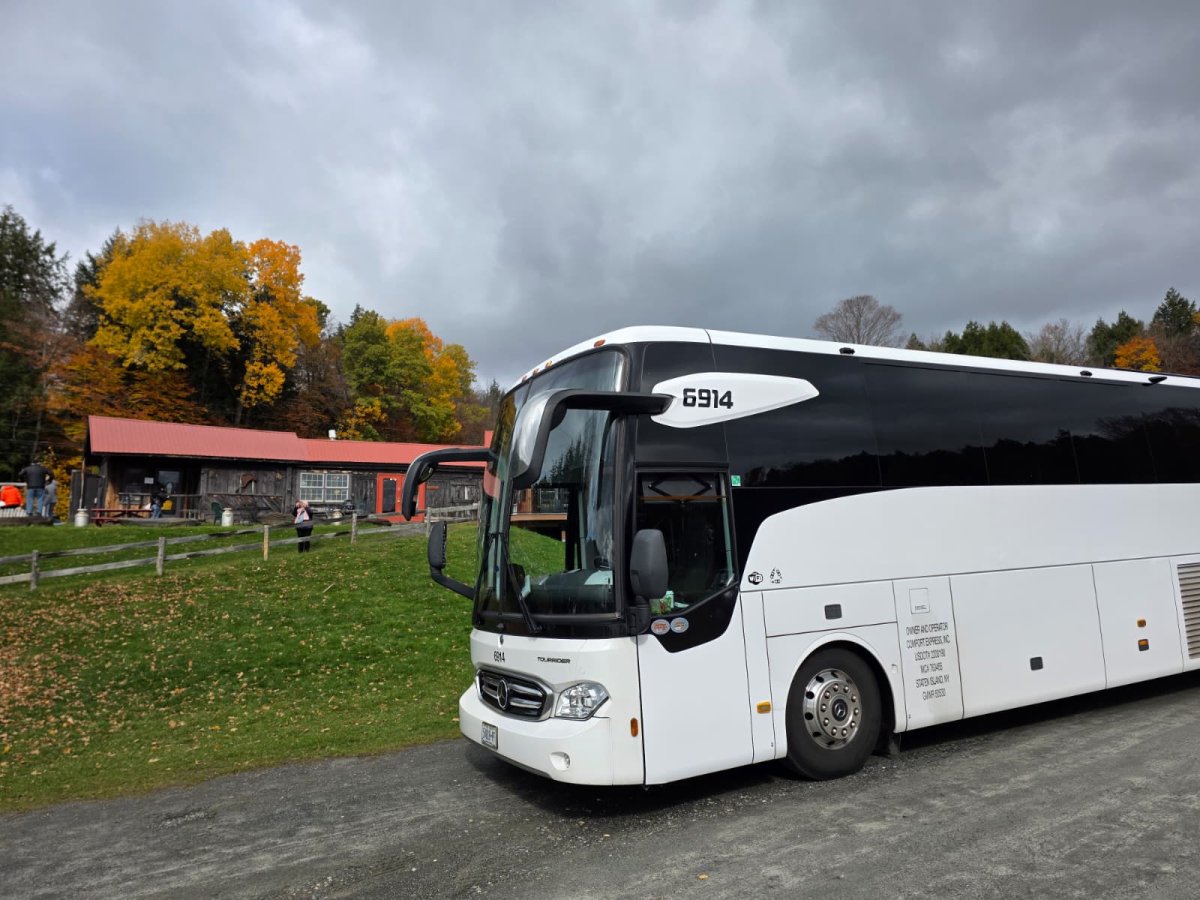
Visitors can enjoy paths, seasonal scenery and elevated views of the downtown skyline.
For groups with limited mobility or a tight schedule, the organizer should select an accessible meeting point and plan the walking route in advance.
Other worthwhile Montreal experiences include the city's markets, cultural districts and restaurants. French-Canadian cuisine, international food and neighborhood cafés provide plenty of options for a group dinner.
One of Montreal's advantages is that travelers do not have to choose between historic sightseeing and contemporary city life. Both experiences are available within the same destination.
Day 5: From Montreal to Quebec City Along the St. Lawrence Corridor
Leaving Montreal for Quebec City, the itinerary continues northeast through the St. Lawrence River region.
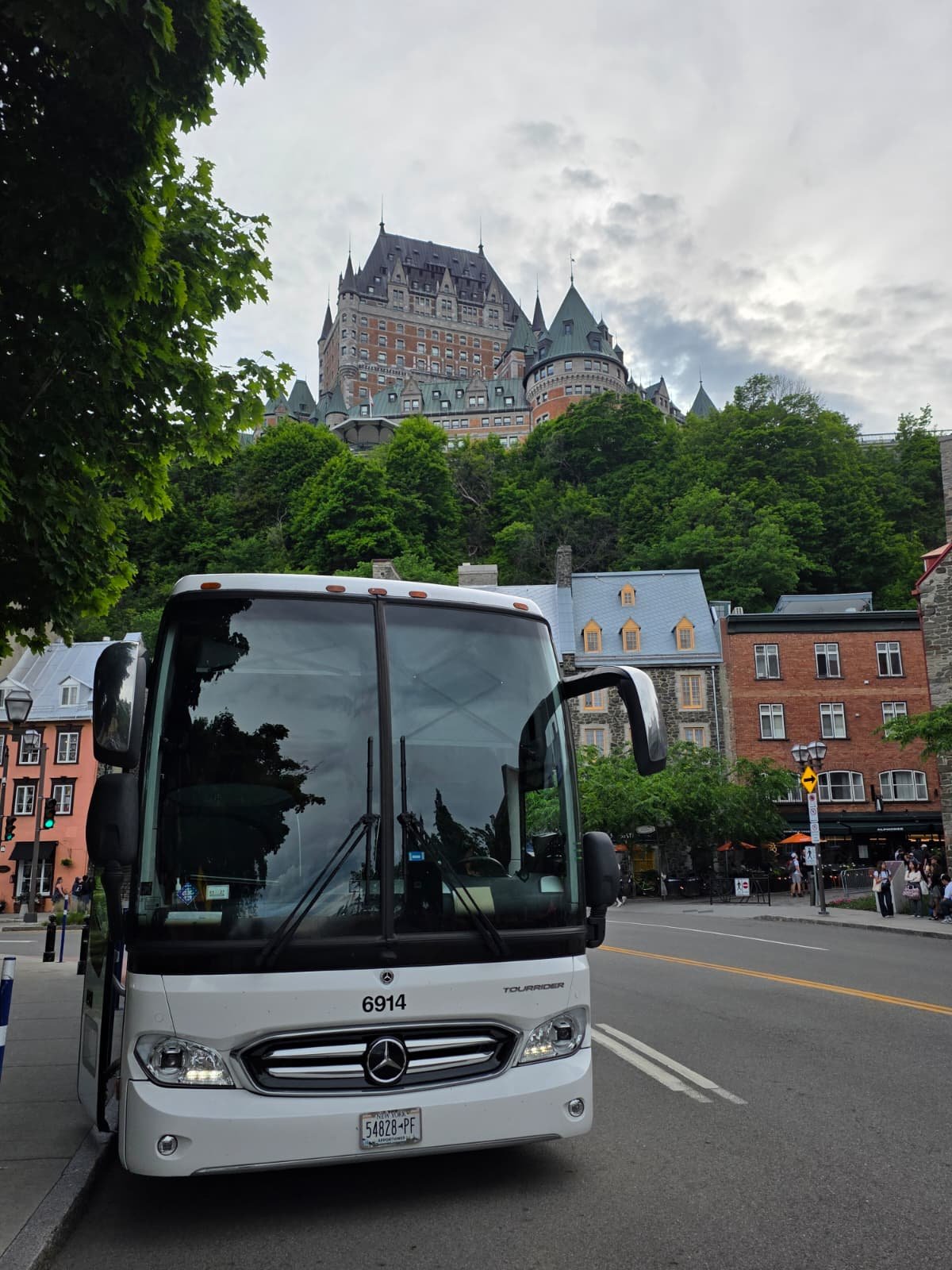
The journey connects Quebec's two best-known major tourist cities, but their personalities are remarkably different.
Montreal feels metropolitan and multicultural, while Quebec City places greater emphasis on its fortified historic center and French colonial heritage.
The drive can generally be planned as a half-day transfer, allowing time for breaks and an afternoon arrival, although traffic and the selected route may change the schedule.
Groups with additional time might arrange a suitable stop along the way rather than treating the journey as a nonstop transfer.
Upon arrival in Quebec City, the first destination should be the historic district of Old Quebec.
First Impressions of Old Quebec
Old Quebec is famous for its stone buildings, narrow streets, historic fortifications and dramatic views of the St. Lawrence River.
Unlike many North American destinations where historic attractions are scattered across a large metropolitan area, a significant part of the city's architectural heritage can be explored within a relatively compact district.
The Historic District of Old Québec was added to the UNESCO World Heritage List in 1985.
The city's character reflects centuries of French and British influence, making it an especially rewarding destination for educational and cultural tours.
Visitors often notice the difference immediately. Street signs are predominantly French, the architectural atmosphere feels distinctly European, and many public spaces preserve a strong connection to the city's colonial history.
Day 6: Château Frontenac and the Historic Heart of Quebec City
No sightseeing tour of Quebec City is complete without visiting Château Frontenac.
Standing high above the St. Lawrence River, the landmark hotel dominates the skyline with steep roofs, towers and a castle-like silhouette.
Although it resembles a European château, the building was developed as a luxury railway hotel. Its first section opened in 1893, and subsequent expansions created the monumental structure visitors recognize today.
The hotel occupies a particularly dramatic position on Cap Diamant, making it visible from several areas of the city.
For many visitors, Château Frontenac becomes the visual centerpiece of their time in Quebec City.
Best Attractions Near Château Frontenac
The surrounding historic district offers enough attractions to fill much of a day.
-
Dufferin Terrace: A broad promenade near the hotel, offering spectacular views over the St. Lawrence River.
-
Place Royale: A historic square associated with the early development of Quebec City.
-
Petit-Champlain: A picturesque district of narrow streets, restaurants, boutiques and historic buildings.
-
The Old Quebec Funicular: A convenient connection between Upper Town and Lower Town.
-
The Plains of Abraham: A major historic landscape associated with the 1759 Battle of Quebec.
-
The Citadelle of Québec: A historic military site overlooking the city.
Visitors interested in photography will appreciate the variety of perspectives. The hotel looks impressive from the streets below, while the elevated terrace offers expansive river views.
Lower Town is particularly rewarding for travelers who prefer intimate streetscapes, historic façades and a slower walking pace.
An Important Detail About Charter Bus Access in Quebec City
Old Quebec has special regulations governing tour bus traffic, passenger drop-offs and parking.
Tour buses are not permitted to park inside the walls of Old Quebec. Designated pickup and drop-off areas have time restrictions, and certain historic streets limit bus access.
For example, the city identifies designated passenger zones with a maximum stopping period of ten minutes. Specific restrictions may change because of road construction and local regulations.
This makes advance transportation planning particularly important.
In a historic city, the best sightseeing itinerary is often a combination of charter bus transportation and carefully planned walking routes. Trying to bring a full-size bus directly to every attraction can create more inconvenience than convenience.
A practical approach is to select one authorized drop-off point, explore a cluster of nearby attractions on foot and reunite with the bus at a prearranged location.
Groups should also understand that commercial guided sightseeing in Quebec City may require a locally licensed tour guide.
These regulations are not merely logistical obstacles. They help protect the historic streets and neighborhoods that make Quebec City worth visiting.
Day 7: Returning from Quebec City to New York City
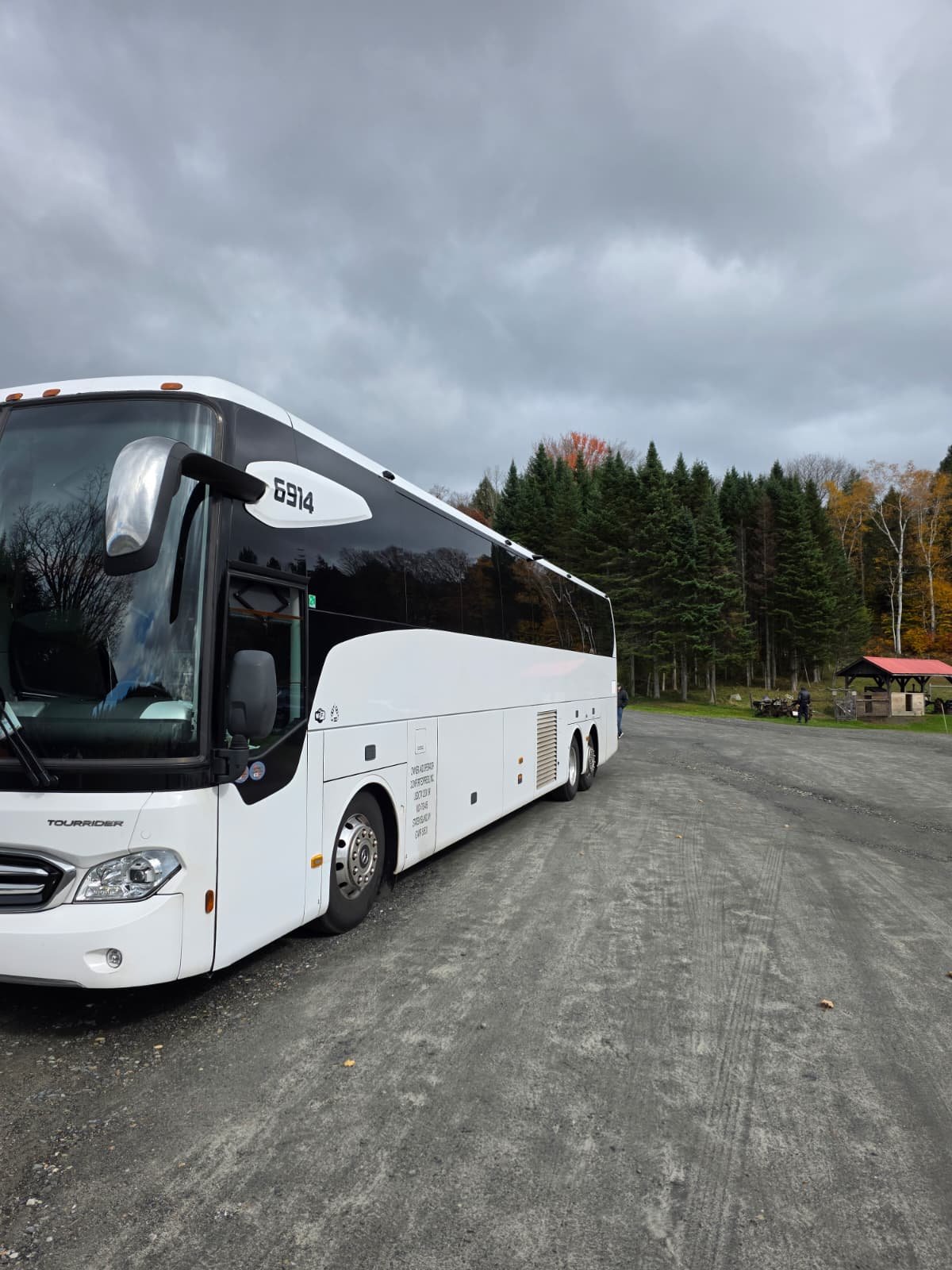
The return journey brings travelers back across the Canadian border into the United States.
Depending on the route, the trip may pass through southern Quebec, northern New York and the Hudson Valley before reaching New York City.
Because of the considerable distance and the uncertainty of border processing, this is the most demanding day in the proposed seven-day itinerary.
For groups that want a relaxed experience, an additional overnight stay in northern New York or Vermont is advisable.
A two-day return also creates opportunities for sightseeing stops that would otherwise be impractical.
Possible activities along the broader return corridor include:
-
Short visits to historic towns.
-
Scenic viewpoints in northern New York.
-
Lunch stops in small communities.
-
Outdoor photography opportunities.
-
Additional time for local attractions, depending on the selected route.
The route should be finalized only after the charter operator has reviewed driving hours, passenger requirements and border arrangements.
How Many Days Do You Need for a Northeast USA and Canada Bus Tour?
The ideal trip length depends on the group's priorities.
A compact trip can focus on Montreal and Quebec City, while a longer tour can include more of New England, additional scenic destinations and extended stays.
| Trip length | Recommended approach | Best suited for |
|---|---|---|
| 4 days | Montreal-focused trip with limited stops | Travelers with restricted schedules |
| 5 days | Montreal and Quebec City | Groups prioritizing Canadian cities |
| 6 days | Vermont, Montreal and Quebec City | Active sightseeing groups |
| 7 days | Full three-destination itinerary | Groups comfortable with longer travel days |
| 8 to 9 days | Same route with additional overnight stops | Families, seniors and relaxed cultural tours |
For most groups traveling from New York City, eight days offers a more comfortable experience than attempting to compress every major attraction into one week.
Another option is to arrange an open-jaw itinerary, in which passengers begin their trip in New York and finish in Canada or another city. Such arrangements require advance coordination with the transportation provider and may involve additional vehicle positioning costs.
Best Time of Year to Visit Vermont, Montreal and Quebec City
Every season changes the character of the journey.
Autumn is especially memorable because of the region's colorful forests, but summer offers more daylight for sightseeing, and winter brings a different kind of charm to the Canadian cities.
Fall: September Through October
For photography enthusiasts and nature lovers, autumn is often the most appealing season.
Vermont's rolling hills become a mosaic of seasonal colors, while historic buildings in Montpelier appear especially striking against red and orange foliage.
Montreal and Quebec City also feature attractive autumn scenery in parks, public gardens and tree-lined streets.
However, fall foliage timing is not guaranteed. Color development depends on temperature, rainfall, elevation and seasonal conditions.
Travelers should not assume that every destination will reach peak color simultaneously.
Summer: June Through August
Summer offers relatively long daylight hours and a wide range of outdoor activities.
Walking tours, riverfront attractions and city parks become especially appealing during warmer weather.
For educational groups and family vacations, summer can also be easier to coordinate with school holidays.
Popular attractions may be busy, so reservations are recommended for organized groups.
Winter: December Through February
Quebec City is particularly atmospheric in winter, when snow-covered streets and seasonal decorations give its historic center a distinctive appearance.
Montreal offers museums, restaurants and cultural attractions that remain attractive regardless of the weather.
Winter bus travel requires careful planning because snow, ice and reduced visibility may affect road conditions.
Additional travel time and flexible scheduling are important.
Spring: April Through May
Spring offers a quieter alternative to peak summer and fall tourism.
However, temperatures may change quickly, and some outdoor attractions or trails can be affected by wet conditions.
For groups primarily interested in architecture, museums and historic landmarks, spring can still be an appealing option.
Why Charter Bus Transportation Works Well for International Group Tours
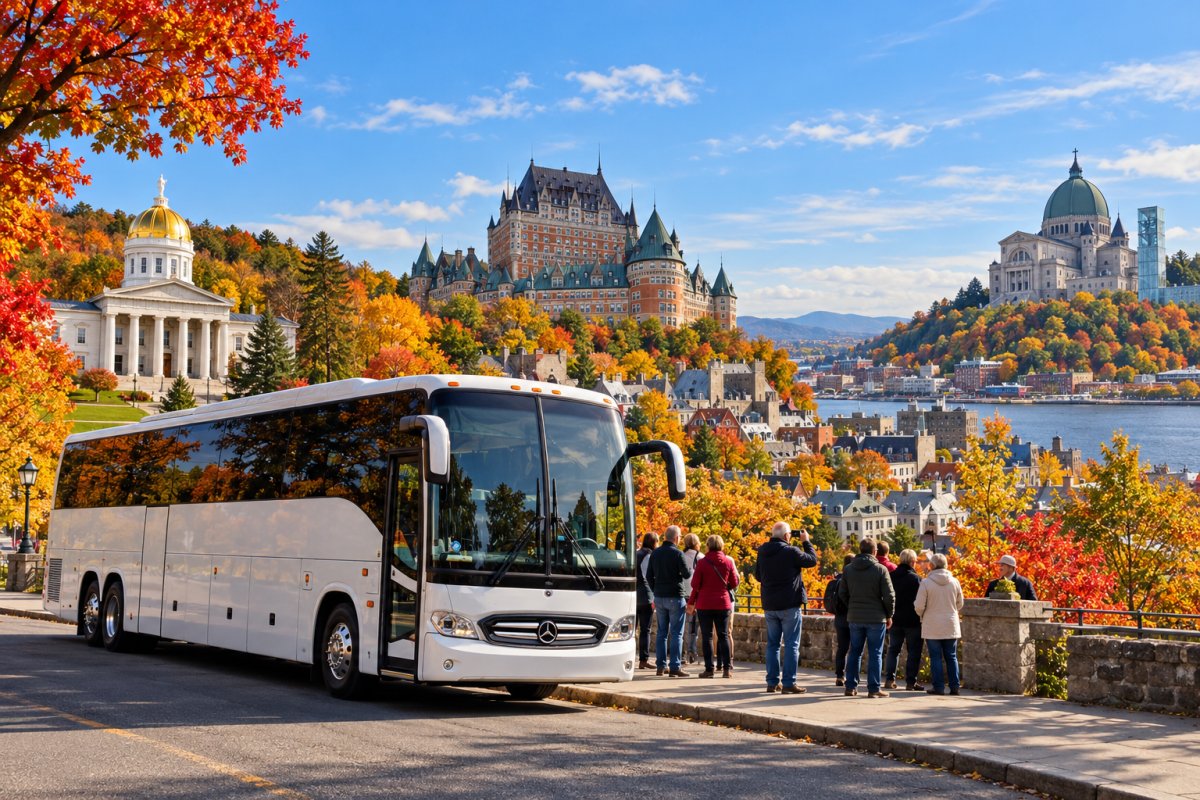
Transportation becomes increasingly complicated when a trip includes multiple cities, hotels and an international border.
Traveling with numerous rental vehicles requires several drivers, separate parking arrangements and constant communication.
A single charter bus allows the group to follow a coordinated schedule.
The main benefits include:
-
Coordinated transportation: Passengers travel together between major destinations.
-
Centralized luggage storage: Bags can remain in designated compartments during appropriate stops.
-
Flexible scheduling: Organizers can select suitable departure times and authorized pickup locations.
-
Group comfort: Depending on the vehicle, amenities may include reclining seats, climate control and onboard restrooms.
-
Simplified logistics: One transportation plan replaces multiple individual driving arrangements.
The benefits become especially noticeable on trips involving several overnight stays.
However, cross-border tours have additional legal requirements. Not every charter bus operator is authorized or equipped to provide international passenger transportation.
Before booking, the organizer should confirm that the company can legally operate the requested itinerary and arrange suitable drivers and vehicles.
Choosing the Right Charter Bus for a Multi-Day Trip
Passenger count is only one factor in vehicle selection.
A group of 25 travelers may be able to use a minibus, but the same group might prefer a larger motorcoach for a long international trip because of luggage space and onboard comfort.
A full-size charter bus is often the more practical choice when travelers bring suitcases for several days.
What to Consider Before Booking
-
Total passenger count, including tour leaders and accompanying staff.
-
Number and approximate size of suitcases.
-
Availability of onboard restroom facilities.
-
Seat comfort during extended highway journeys.
-
Accessibility requirements.
-
Border-crossing eligibility of the operator and vehicle.
-
Driver schedules and required rest periods.
-
Hotel locations and overnight bus parking.
For multi-day travel, choosing a vehicle with more seating capacity than the number of passengers may improve comfort, but it is not always necessary or cost-effective.
The right decision depends on the budget, available fleet and expected travel conditions.
What Determines the Cost of a Northeast USA and Canada Charter Bus Tour?
An international charter bus tour should be priced using the full itinerary rather than a simple hourly estimate.
Several factors affect the transportation quote.
| Cost factor | Why it matters |
|---|---|
| Travel distance | Longer routes increase operating expenses |
| Number of days | Extended trips require more driver and vehicle time |
| Driver accommodation | Overnight itineraries may require hotel arrangements |
| Vehicle type | Larger coaches and different amenities affect pricing |
| Season | Demand can increase during holidays and fall foliage |
| Parking and road charges | Some destinations involve additional fees |
| International operations | Cross-border arrangements may affect availability and cost |
| Driver scheduling | Longer trips may require additional drivers or overnight breaks |
The lowest initial quote is not necessarily the lowest final cost.
Organizers should clarify whether the proposal includes fuel, tolls, applicable taxes, driver lodging, parking fees and other foreseeable expenses.
For more information about factors affecting rental prices in New York, see the NYC bus rental pricing guide.
It is also worth requesting separate transportation quotes for a seven-day and an eight-day itinerary. The additional hotel night may increase certain expenses, but a less compressed schedule can improve the group's overall travel experience.
Common Mistakes When Planning a Cross-Border Group Bus Tour
International group travel requires attention to details that may seem minor during the initial planning stage.
One of the most common problems is an overly ambitious itinerary. Organizers sometimes estimate driving times using standard passenger-car navigation and then add numerous sightseeing stops without considering the realities of moving a large group.
A motorcoach may require different routes, designated parking areas and additional time for boarding and unloading.
Other planning mistakes include:
-
Leaving passport and visa checks until shortly before departure.
-
Assuming all charter companies can operate in Canada.
-
Scheduling activities too close to an international border crossing.
-
Booking downtown hotels without confirming bus access.
-
Underestimating time needed for meals and restroom breaks.
-
Ignoring seasonal road conditions.
-
Planning a long final driving day after several intensive sightseeing days.
The best solution is to build realistic margins into the schedule.
In practice, travelers often remember a relaxed visit to a remarkable location more positively than several rushed attractions completed merely to satisfy an itinerary.
Frequently Asked Questions
Can You Travel from New York City to Montreal and Quebec City by Charter Bus?
Yes, a charter bus trip can connect New York City with Montreal and Quebec City, provided the operator has the necessary authority and satisfies the applicable requirements for international passenger transportation.
Passengers must also have the documents required for entering Canada and returning to the United States.
How Long Does a Bus Tour from NYC to Quebec City Take?
A direct journey can take much of a day, depending on the route, traffic and border crossing. A sightseeing itinerary that includes Vermont and Montreal is better planned over several days.
Six to eight days can accommodate all three destinations, with additional time improving comfort and flexibility.
Is Vermont Worth Visiting on a New York to Canada Road Trip?
Yes. Vermont adds a contrasting experience between the large cities of New York and Quebec. Montpelier offers historic architecture, while the state's countryside provides opportunities for scenic drives and seasonal photography.
The destination is especially appealing during fall foliage season.
Do American Travelers Need a Passport to Visit Canada by Bus?
A valid U.S. passport is the simplest recommended document, but Canadian authorities may accept certain alternative documents for U.S. citizens entering by land. U.S. reentry rules also recognize several approved travel documents.
Travelers should verify both countries' current requirements before departure. Requirements differ for foreign nationals and permanent residents.
Can a Charter Bus Park in Old Quebec?
Tour bus parking is prohibited inside the walls of Old Quebec. Operators must follow designated passenger loading rules and use authorized parking areas outside the historic district.
These regulations should be considered when choosing walking tours and meeting locations.
Is a 56-Passenger Charter Bus Suitable for This Trip?
A full-size motorcoach can be well suited to an extended group trip because of its seating capacity and potential luggage storage.
However, actual passenger and luggage capacity must be confirmed for the specific vehicle.
Is October a Good Month for a Northeast USA and Canada Bus Tour?
October can be an excellent month for autumn scenery, particularly in Vermont and parts of Quebec. Nevertheless, the timing of peak colors varies every year and by location.
The weather can also become chilly, especially in northern areas.